This transform can filter and sort a tree-based data source.
Filtering
Filtering is possible according to the name of elements, the hierarchy, and the attribute values of the elements. TreeView transform is more flexible than the TableView transform and can also preserve the tree structure of the source.
Input
To define a filter on the element name (default), keep this entry empty or select “element”. To define a filter on an attribute value of the source, select one of the attributes.
Filter type
Various filter lines to the same input column are evaluated like a rule chain with the filter types "accept" and "deny". If only accept filters are used, this behaves like a logical OR.
Operator
Comparison operators can be used on element names.
equal The element entered here will be filtered. Filter behavior depends on the type of data:
- String: the filter must be exactly equal to the source value.
- Decimal number (floating or double): the filter value must be the most minimal representation of the value. For example, if the source value is 1.0, the filter value must be 1. If the source value is 1.5000, then the filter value must be 1.5.
- Non-decimal number (int or long): the filter value must be exactly the same as the number.
- Boolean (true/false): the filter must be "true" or "false" as appropriate.
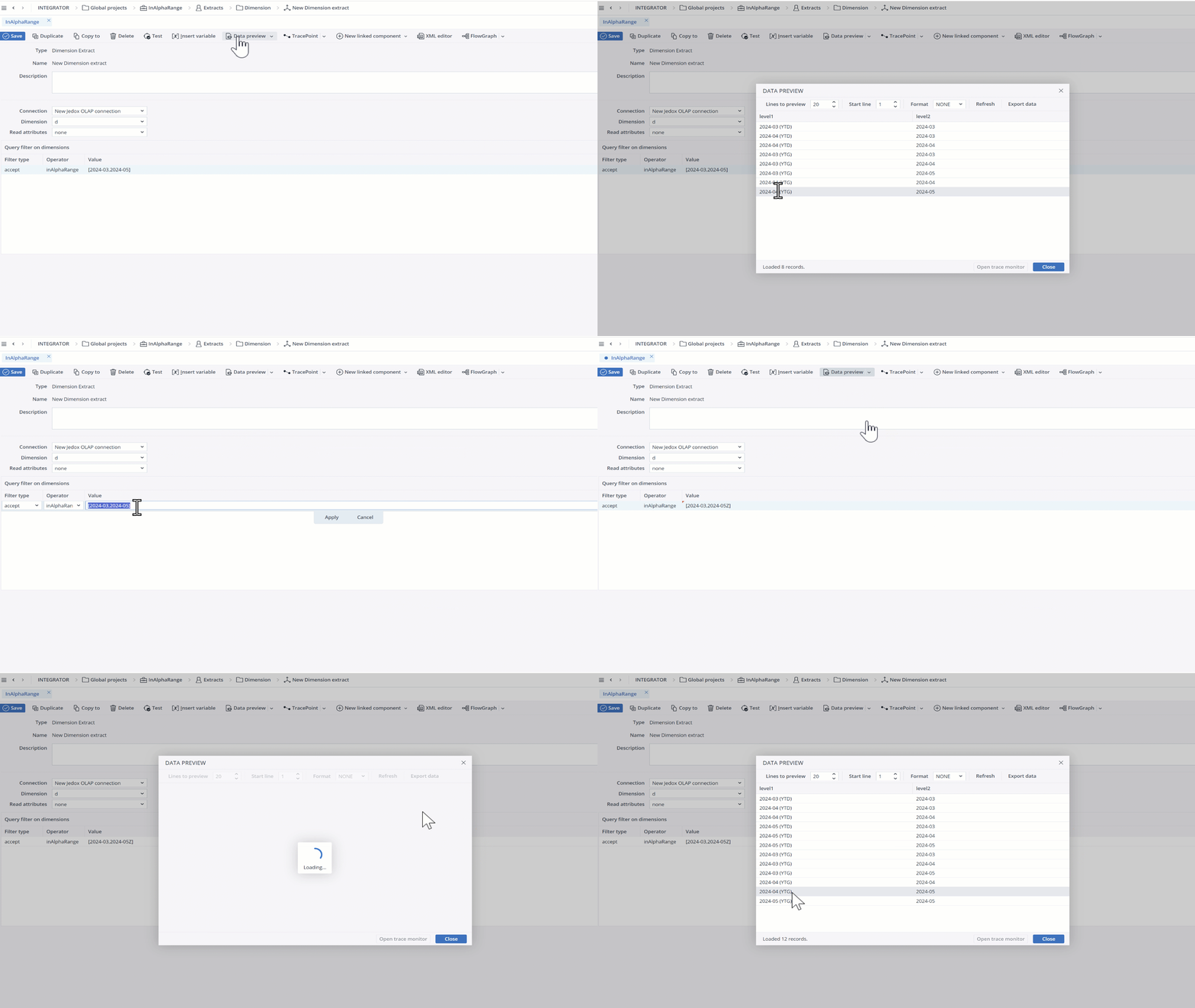
inAlpharange Alphanumerical values in a particular range are filtered. Example: [A100,D200]. The short GIF below shows how this functionality works with dates.
inRange Numerical values in a particular range are filtered. Example: [1000,2000] Other examples:
- “[100,200]” - inclusive range: 100, 101.....199, 200
- “(100,200)” - exclusive range: 101, 102, ... 198, 199
- “[100,]” - inclusive half-open interval: numbers greater or equal to 100
- “[,100)” - exclusive half-open interval: numbers lower than 100
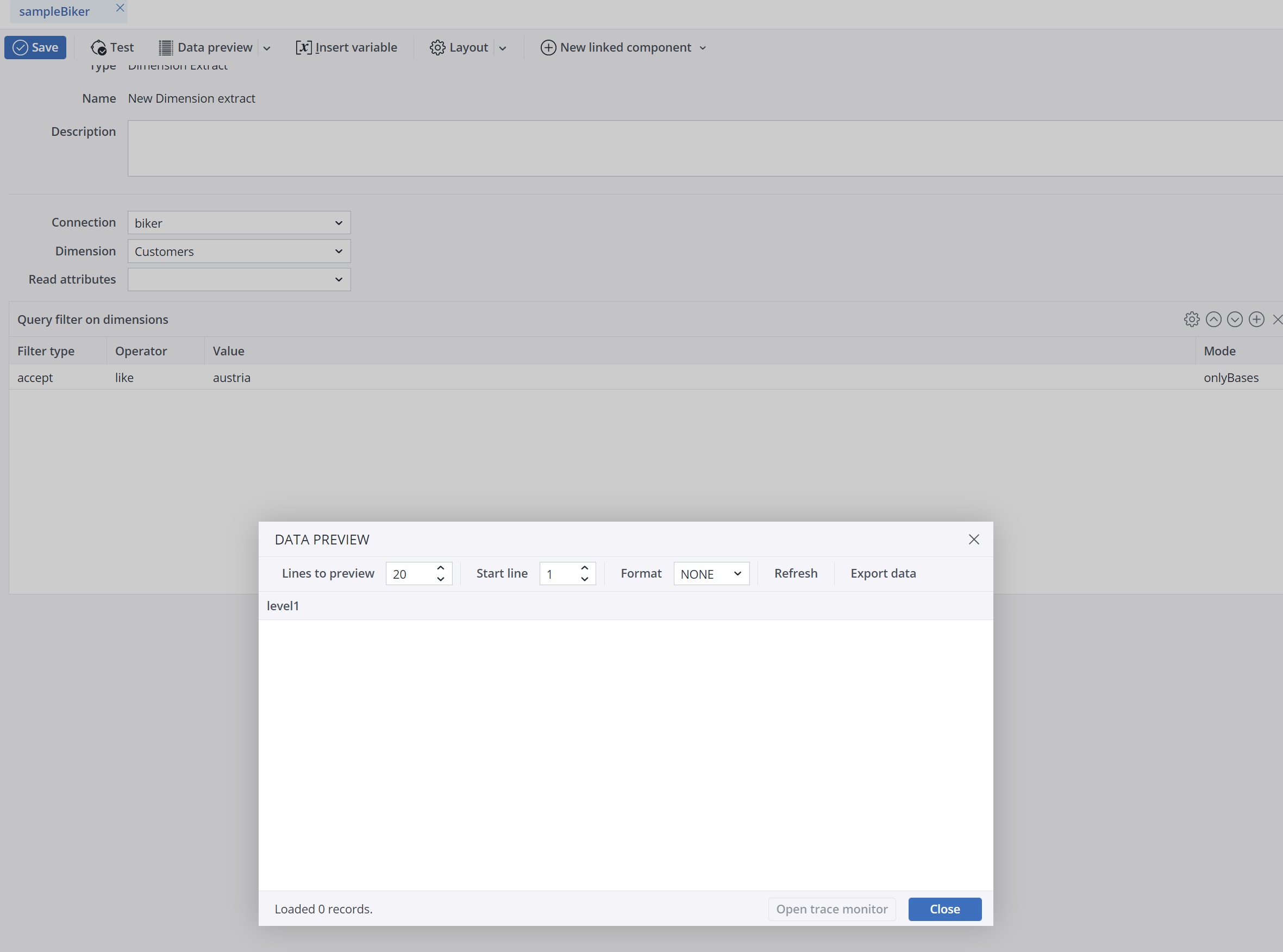
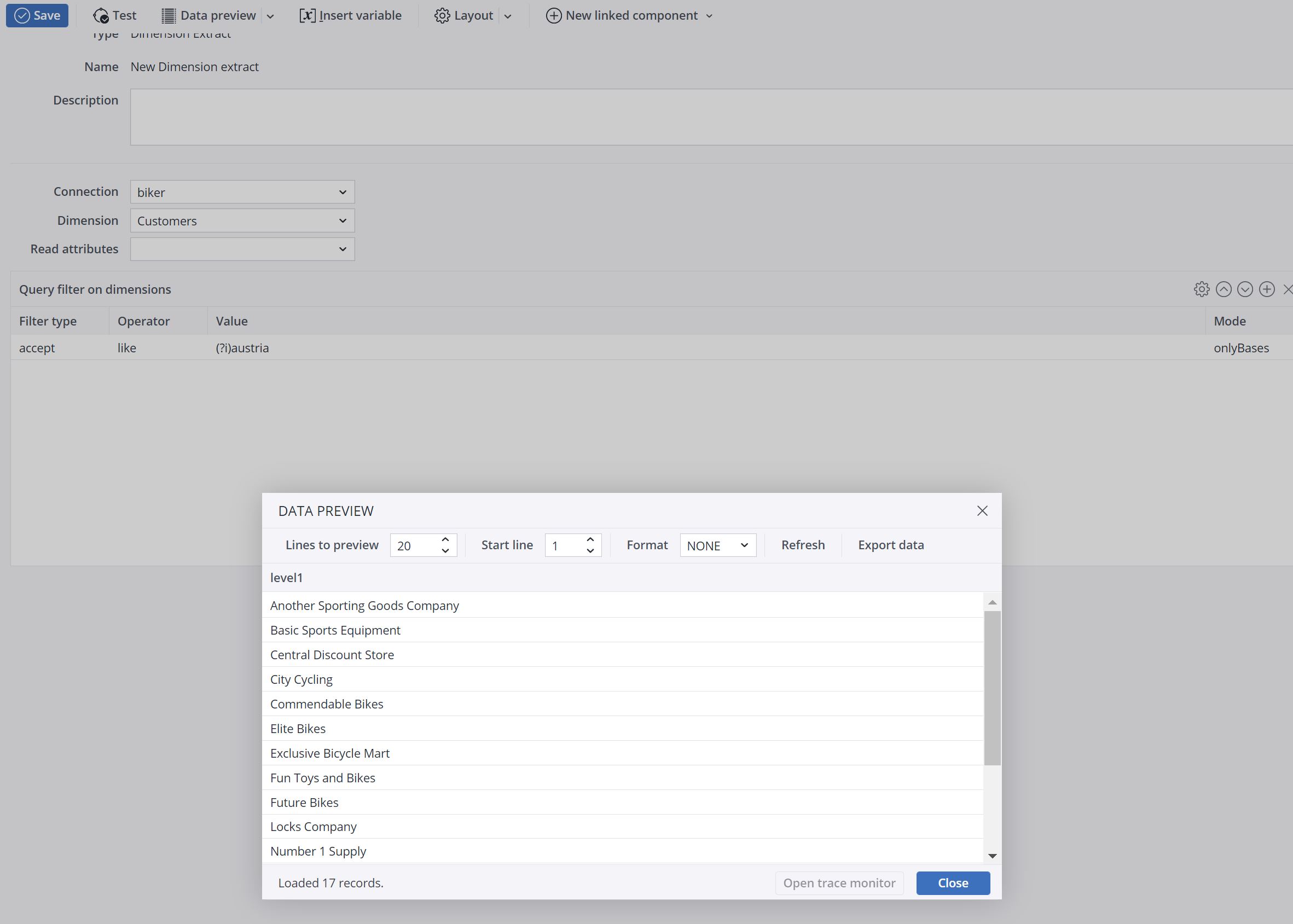
isEmpty Empty values (blank, space, or multiple space values). For this operator, the Value field should be left blank. isNull The condition is true for NULL values but not for (possibly trimmed) empty strings. like Filters the dimension elements according to regular expressions. This operator is case-sensitive. You can change that by using the (?i) modifier at the start of a regular expression.
After using the regular expression, the data preview must look like in the example below:

Value
The element you want to filter for in the dimension. This field is required for all operators except "isEmpty".
Mode
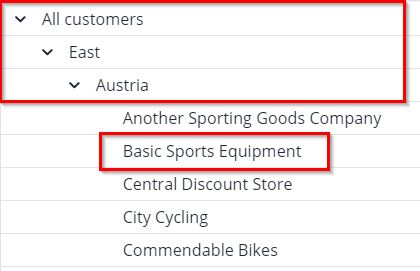
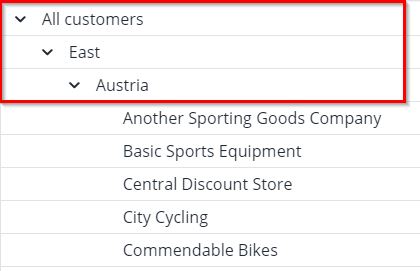
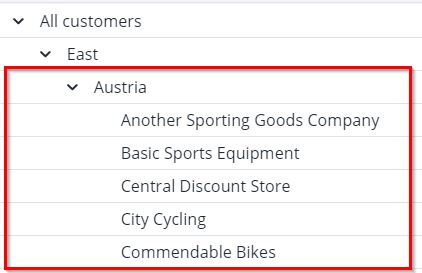
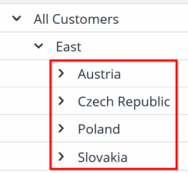
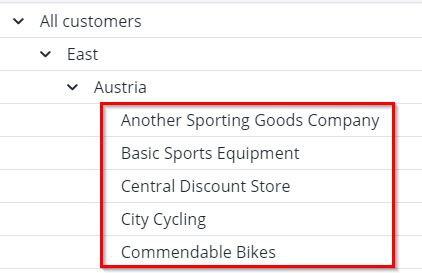
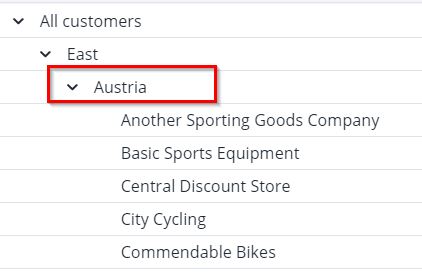
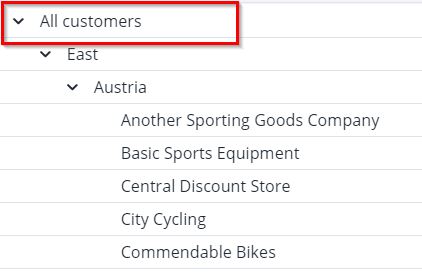
Defines a hierarchical filter for the dimension. If not set, the default mode "onlyNodes" is applied, returning only the filtered elements independently of the hierarchy. In case of a global Subset filter, a mode is in general not reasonable.
Sorting
The tree sources can be sorted based on different sorting inputs:
-
:element: the name of the element
-
:level: the numerical level of the element in the hierarchy i.e., the depth in the tree
-
<attribute name>: a tree attribute value
Elements can be sorted in ascending or descending order, with or without case sensitivity. Multiple sort criteria can also be defined.
Sort Children
When checked, the TreeView transform sorts the child consolidations for each tree node in alphanumerical order.
Sort positions
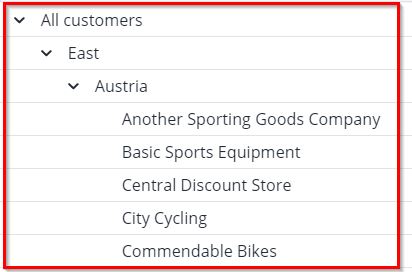
If this option is set in addition to "Sort children", the global position of the elements in the tree is ordered. The screenshot below shows the difference between the enabled and disabled “Sort positions” options.
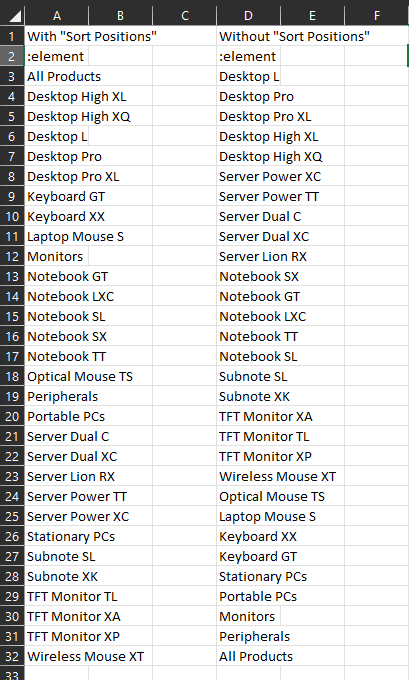
Note: this can best be seen when displaying the tree with format "EA".
Updated April 29, 2026